Explore Oregon Wines: Wineries | Varietals | AVAs | Cellar 503 Selections
All Hail Cabernet Franc
November 2026
Meet the parent of Cabernet Sauvignon and Merlot.
Cabernet Franc is one of the oldest, most important foundation varieties in viticultural history. Through natural cross-pollination over the centuries, it is directly responsible for giving us several of the world's most famous wine grapes.
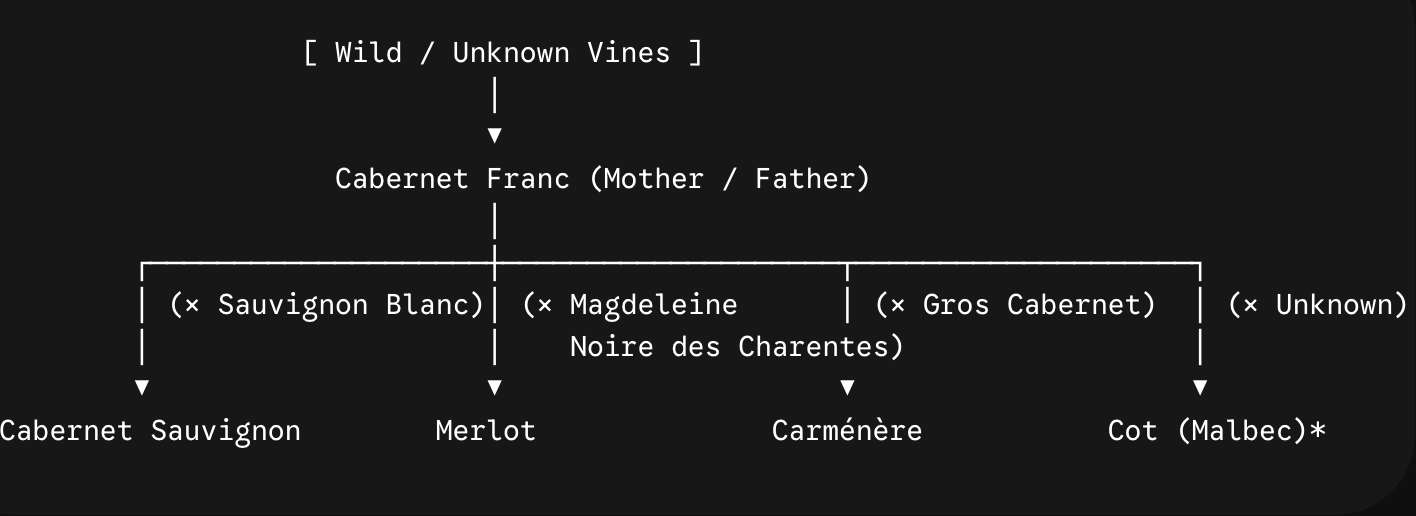
The Direct Offspring (Children of Cabernet Franc)
Cabernet Sauvignon: Formed by a natural cross between Cabernet Franc and Sauvignon Blanc in 17th-century southwestern France. It inherited Cabernet Franc's structural tannins and herbal aromatics (pyrazines), paired with Sauvignon Blanc's acidity and vigor.
Merlot: Born from a cross between Cabernet Franc and Magdeleine Noire des Charentes (an obscure, nearly extinct dark-skinned mother grape). This cross gave Merlot its plump, rounded fruit profile and softer tannin structure.
Carménère: Originating in the Médoc region of Bordeaux, this is a cross between Cabernet Franc and Gros Cabernet. Like its parent, Carménère is notorious for strong herbal notes (green pepper and capsicum).
Malbec (Cot): Genetic testing shows Malbec is an offspring of Prunelard and Magdeleine Noire des Charentes, making it a half-sibling to Merlot and a close genetic relative to Cabernet Franc.
Sauvignon Blanc Connection
Because Sauvignon Blanc is the mother of Cabernet Sauvignon, Cabernet Franc is also indirectly connected to Savagnin (Traminer), making it part of an ancient web that includes Chenin Blanc and Grüner Veltliner.
Key Takeaway for Wine Lovers
If you love Bordeaux-style wines (Cabernet Sauvignon, Merlot, Carménère), you are essentially drinking the direct genetic descendants of Cabernet Franc. It is the aromatic, herbal backbone of western European viticulture.
While Cabernet Franc is famous in France’s Loire Valley and Bordeaux, it thrives in Oregon's warmer pockets like the Umpqua Valley, and Mt. Pisgah.
Celebrate Cabernet Franc
December 4th is International Cabernet Franc Day
Tasting Notes
Highlight its signature profile of bright red fruit (raspberry, red currant), violet florals, crushed gravel, and savory herbal notes (bell pepper, dried herbs) driven by natural compounds called pyrazines.
Food Pairing
Recommend roasted pork tenderloin, herb-crusted lamb, mushroom risotto, or a charcuterie board with aged Gouda and Camembert.